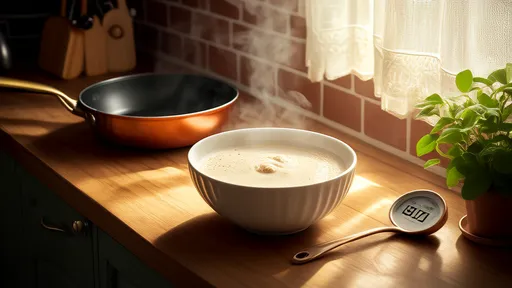
In kitchens across Asia, a peculiar phenomenon occurs daily when preparing fresh soy milk—the liquid appears to boil long before it reaches true cooking temperature. This deceptive bubbling, known as "false boil" or "假沸" in Chinese, has fooled countless home cooks into turning off the heat prematurely. What appears to be a vigorously boiling pot may only hover around 70°C (158°F), creating potential health risks if consumed untreated.
When bubbles don't mean safety
The foamy uprising that mimics boiling stems from saponins—natural compounds in soybeans that create soap-like foam when agitated by heat. Unlike water's predictable phase change at 100°C (212°F), soy milk's complex composition causes surface bubbling at much lower temperatures. Traditional cooking wisdom passed down through generations insists on continuing to simmer for at least eight minutes after this initial foaming, a practice now validated by food science.
Raw soybeans contain trypsin inhibitors and lectins—antinutrients that can cause digestive distress and interfere with protein absorption. These compounds break down gradually between 90-100°C (194-212°F), requiring sustained heat rather than momentary bubbling. The eight-minute rule ensures the center of each molecule reaches denaturation temperatures, not just the liquid's surface.
The chemistry of proper soy milk preparation
During extended boiling, a fascinating molecular ballet occurs. Trypsin inhibitors unfold their intricate protein structures at 92°C (198°F), rendering them harmless. Lectins begin disintegrating at 88°C (190°F) but require several minutes to fully deactivate. Meanwhile, the Maillard reaction creates new flavor compounds, transforming the raw beany taste into creamy richness.
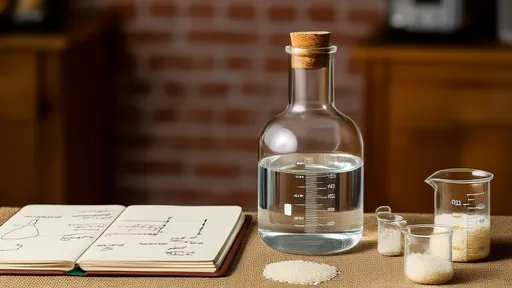
Modern kitchen experiments with thermometer probes reveal why visual cues fail. While foam may crown the pot at 70°C (158°F), the liquid beneath often remains 20 degrees cooler. This thermal stratification means harmful compounds persist in cooler pockets unless thorough, prolonged heating equalizes temperatures throughout the mixture.
From farm tradition to food safety protocol
Historical records from China's Song Dynasty describe soy milk preparation techniques remarkably similar to modern practices. Ancient cooks observed that longer cooking produced more digestible results, though they lacked thermometers to quantify the phenomenon. Today, food safety agencies globally have adopted the eight-minute standard after laboratory testing confirmed its effectiveness.
Commercial soy milk producers use precise temperature controls, but home cooks must rely on low-tech methods. Maintaining a vigorous simmer (not rolling boil) for the full duration ensures even heat distribution without excessive evaporation. Stirring occasionally prevents scorching while helping equalize temperatures between top and bottom layers.
Recognizing true boiling versus false foam
Seasoned soy milk makers identify subtle differences between early foaming and genuine boiling. False foam appears suddenly, with large, irregular bubbles that collapse quickly. True boiling produces smaller, more persistent bubbles throughout the liquid with visible steam. The aroma also changes dramatically—raw soy milk smells grassy, while properly cooked milk develops nutty, toasted notes.
Electric blenders and modern appliances have introduced new variables. High-speed blending incorporates more air, potentially increasing foam volume during heating. Pressure cookers can accelerate the process but require careful monitoring to ensure sustained high temperatures. Regardless of equipment, the eight-minute timer should start only after the liquid reaches a full, rolling boil—not the initial foaming stage.
Global implications for plant-based milk safety
As soy milk gains popularity worldwide, understanding proper preparation becomes crucial for food safety. European and North American consumers accustomed to pasteurized commercial products may underestimate the risks of homemade versions. Public health agencies now include soy milk guidelines in food safety education alongside traditional meat and dairy handling instructions.
The eight-minute rule represents more than folk wisdom—it's a critical control point in Hazard Analysis and Critical Control Points (HACCP) systems for soy product manufacturing. Home kitchens may lack industrial precision, but adhering to this time-tested standard provides reliable protection against foodborne illness while optimizing flavor and nutritional availability.
Preserving nutrition while ensuring safety
Extended boiling inevitably affects heat-sensitive nutrients, but the trade-off remains necessary. Vitamin B1 and folate degrade somewhat during cooking, while protein bioavailability increases significantly. Modern nutrition studies confirm that properly prepared soy milk delivers more usable protein than raw or undercooked versions, despite minor vitamin losses.
The solution isn't shorter cooking but smarter supplementation. Many cultures traditionally pair soy milk with nutrient-dense accompaniments—sesame paste provides calcium, while fermented vegetables add probiotics. This holistic approach maintains nutritional balance while ensuring food safety through adequate heat treatment.
A lesson in thermal patience
In our era of instant gratification, the soy milk false boil phenomenon teaches valuable lessons. Some transformations cannot be rushed—molecular changes require their own timeline. That eight-minute wait represents centuries of accumulated culinary wisdom, now explained by science but no less magical in its ability to turn hard beans into nourishing, creamy milk.
As plant-based diets grow globally, understanding these fundamental processes becomes increasingly important. The humble soybean's deceptive boil serves as a reminder that nature often conceals complexity beneath simple appearances, and that true safety—like good food—requires both knowledge and patience.
By /Jul 31, 2025
By /Jul 31, 2025
By /Jul 31, 2025
By /Jul 31, 2025
By /Jul 31, 2025
By /Jul 31, 2025
By /Jul 31, 2025
By /Jul 31, 2025
By /Jul 31, 2025
By /Jul 31, 2025
By /Jul 31, 2025
By /Jul 31, 2025

By /Jul 31, 2025
By /Jul 31, 2025
By /Jul 31, 2025
By /Jul 31, 2025
By /Jul 31, 2025
By /Jul 31, 2025
By /Jul 31, 2025
By /Jul 31, 2025
