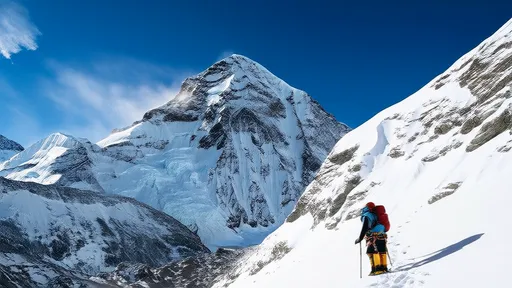
Nepal's recent decision to close the southern routes of Mount Everest for the upcoming climbing season has sent ripples through the mountaineering community. While the iconic South Col route will remain inaccessible, the country has unveiled a series of equally breathtaking alternatives that promise to redefine high-altitude adventure. These lesser-known paths offer not just technical challenges but also unparalleled vistas of the Himalayas, ensuring that the spirit of exploration remains undiminished.
The closure of the southern routes comes as part of Nepal's broader strategy to manage overcrowding and environmental degradation on Everest. For decades, the South Col route has been the go-to path for most commercial expeditions, leading to dangerous bottlenecks and a troubling accumulation of waste. By redirecting climbers to other trails, authorities aim to distribute foot traffic more evenly across the region while showcasing the diversity of Nepal's mountainous terrain.
The Great Himalayan Trail emerges as one of the most compelling alternatives, stretching across the entire length of Nepal's high mountains. This network of ancient trade and pilgrimage routes takes trekkers through remote valleys and high passes, offering a more immersive cultural experience than the standard Everest ascent. Climbers will encounter traditional Sherpa villages untouched by mass tourism, where prayer flags flutter against the backdrop of snow-capped peaks.
Another remarkable option is the Makalu Base Camp trek, which approaches Everest from the east. This route presents a more technical challenge than the standard southern ascent, with steeper ice walls and more complex glacier navigation. The reward comes in the form of breathtaking views of Makalu's pyramid peak and the rarely seen Kangshung Face of Everest - a 3,000-meter wall of ice and rock that few Western climbers have witnessed up close.
For those seeking complete solitude, the Gokyo Lakes circuit provides an exquisite alternative. This route ascends through the sacred valley of the same name, passing turquoise glacial lakes that reflect the surrounding giants like perfect mirrors. The trail culminates at Gokyo Ri, a viewpoint that rivals Kala Patthar for its panoramic vista of Everest, Lhotse, and Cho Oyu, but without the crowds that have become synonymous with the traditional base camp trek.
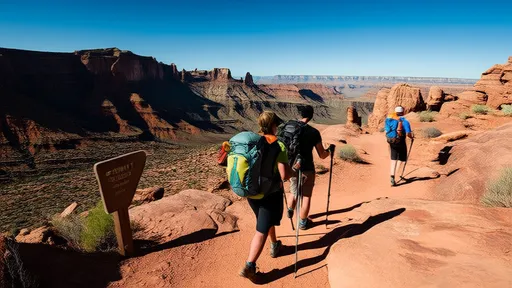
The Three Passes trek stands out as perhaps the most comprehensive alternative, combining elements of several routes into one demanding circuit. Crossing the Kongma La, Cho La, and Renjo La passes above 5,000 meters, this journey offers a complete immersion in the Khumbu region's dramatic landscapes. Climbers experience Everest from multiple perspectives while traversing high alpine deserts, ancient moraines, and pristine glacial valleys.
Nepal's mountaineering authorities emphasize that these alternative routes require careful preparation and realistic self-assessment. "These are not easier options," warns a spokesperson for the Nepal Mountaineering Association. "They demand superior technical skills and better physical conditioning than the standard southern route. But for those who rise to the challenge, the rewards are extraordinary."
The shift in policy has been met with cautious optimism by veteran guides. Many recall how similar route diversions in the past led to the discovery of new climbing gems. The Annapurna Circuit, now world-famous, was once just an alternative path when more popular routes became overcrowded. There's growing excitement that Everest's satellite peaks and neighboring valleys might gain similar recognition through this initiative.
Environmental scientists have applauded the move as a necessary step toward sustainable tourism. The southern routes had become ecological pressure points, with human waste and discarded equipment accumulating at alarming rates. By spreading climbers across a wider area and implementing stricter waste management protocols on these new routes, Nepal hopes to protect its fragile alpine ecosystems while still welcoming adventure seekers.
Local communities stand to benefit significantly from the route redistribution. Many of the alternative paths pass through villages that have seen little economic benefit from Everest's climbing industry. Tea houses along these trails report a surge in bookings, and cultural exchange programs between climbers and remote Himalayan settlements are flourishing. A Sherpa elder from the Makalu region notes, "For the first time, our children are seeing that they don't need to carry loads on Everest to make a living from the mountains."
The new policy also opens doors for innovative expedition styles. Some operators are pioneering "traverse" climbs that link multiple 8,000-meter peaks using these alternative routes. Others are developing combination climbing-cultural immersion programs that spend as much time in monasteries and villages as on the ice. This diversification could mark the beginning of a new era in Himalayan mountaineering - one that values depth of experience over summit statistics.
While the closure of Everest's southern routes initially caused concern, the emerging consensus suggests this could be a transformative moment for high-altitude adventure. The alternative paths offer more than just different ways to reach the same destination; they present entirely new relationships with the world's highest mountains. As one veteran climber preparing for the Three Passes route put it, "I've summited Everest three times via the South Col, but now I feel like I'm discovering the Himalayas for the first time."
Looking ahead, Nepal's mountaineering authorities hint at more changes to come. The current route adjustments may be just the first step in a comprehensive reimagining of Himalayan climbing logistics. With climate change altering glacier conditions and shifting climbing seasons, such adaptability will become increasingly crucial. For now, the focus remains on making these alternative routes safe, sustainable, and rewarding for the new generation of climbers they will attract.
The essence of exploration has always been about venturing beyond the known, and in that spirit, Nepal's new Everest policy might ultimately enrich the mountaineering experience for everyone. These alternative routes don't just lead to the top of the world - they wind through the very soul of the Himalayas, offering glimpses of its untamed beauty that few have witnessed before. The mountains haven't changed, but how we approach them is undergoing its most significant transformation in decades.

By /Aug 6, 2025
By /Aug 6, 2025
By /Aug 6, 2025

By /Aug 6, 2025
By /Aug 6, 2025
By /Aug 6, 2025
By /Aug 6, 2025
By /Aug 6, 2025

By /Aug 6, 2025
By /Aug 6, 2025
By /Aug 6, 2025
By /Aug 6, 2025
By /Aug 6, 2025
By /Aug 6, 2025

By /Aug 6, 2025
By /Aug 6, 2025

By /Aug 6, 2025

By /Aug 6, 2025
By /Aug 6, 2025
By /Aug 6, 2025
