Nestled between the rugged Al Hajar Mountains and the shimmering waters of the Gulf of Oman, Muscat’s ancient quarter has long been a hidden gem in the Arab world. Unlike the flashy skyscrapers of Dubai or the bustling souks of Marrakech, Muscat’s old town offers a quieter, more introspective journey into Arabia’s past. But what makes it truly unique is its seamless blend of heritage preservation and modern cultural revival—all while maintaining its reputation as one of the safest cities in the region.
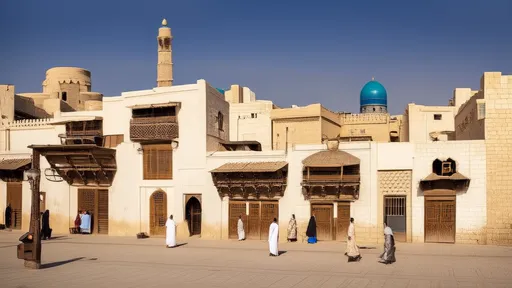
Walking through the labyrinthine alleys of Old Muscat, visitors are immediately struck by the immaculate white-washed buildings, their arched doorways and latticed windows whispering tales of Portuguese invasions, Omani maritime glory, and Bedouin traditions. The scent of frankincense—Oman’s legendary export—lingers in the air, drifting from tiny shops where artisans still grind the resin into fragrant powders. This isn’t a staged tourist attraction; it’s a living, breathing neighborhood where history isn’t just displayed but lived.
The revival of Muscat’s historic core didn’t happen by accident. Over the past two decades, Oman’s government has implemented meticulous urban policies to protect the area’s architectural integrity while injecting new life into its cultural scene. Traditional houses have been restored using original materials like sarooj (a local clay mortar), and strict zoning laws prevent towering hotels from overshadowing 18th-century forts. Yet, within these preserved walls, contemporary art galleries, indie bookshops, and avant-garde coffeehouses have flourished, creating a cultural dialogue between past and present.
One cannot discuss Muscat’s renaissance without mentioning the pivotal role of the Royal Opera House. Inaugurated in 2011, this architectural masterpiece—with its intricate Islamic geometric patterns and state-of-the-art acoustics—has become the beating heart of Oman’s arts scene. From Arabic maqam performances to Wagnerian operas, the programming deliberately bridges East and West. Locals proudly note that even during regional tensions, artists from across the Middle East continue to gather here, their collaborations uninterrupted by politics.
Safety, often an afterthought in travel narratives, is central to Muscat’s cultural appeal. While other Middle Eastern cities grapple with instability, Oman has remained a neutral oasis. Crime rates are astonishingly low—women frequently walk alone at night, and lost wallets are reportedly returned with cash intact. This sense of security has allowed the arts to thrive organically. Late-night poetry readings in Mutrah Corniche or spontaneous Sufi music sessions near Al Jalali Fort carry an unguarded authenticity rare in today’s world.
The Muttrah Souq, arguably the soul of Old Muscat, embodies this harmonious duality. By day, it’s a kaleidoscope of silver daggers (the iconic khanjars), handwoven textiles, and Persian carpets. As sunset paints the harbor gold, the souq’s periphery transforms. Young Omani filmmakers screen documentaries in repurposed warehouses, while nearby, third-generation spice merchants debate the merits of saffron with Michelin-starred chefs hosting pop-up dinners. This isn’t gentrification; it’s a natural evolution where tradition sets the stage for innovation.
Perhaps most striking is how Muscat’s cultural revival has been driven from within. Unlike cities where expats dictate creative trends, initiatives here are overwhelmingly Omani-led. The annual Muscat Festival, for instance, showcases local playwrights and musicians alongside international acts. Even the graffiti murals adorning the seawall near Al Mirani Fort tell distinctly Omani stories—abstract depictions of dhows sailing past Portuguese castles, or modernist interpretations of Bedouin poetry.
As European cities battle overtourism and some Middle Eastern destinations remain volatile, Muscat’s old quarter offers a compelling alternative: a culturally rich, inherently safe haven where the past isn’t frozen but serves as a foundation for creative expression. For travelers weary of curated experiences, this ancient yet evolving corner of Arabia promises something increasingly precious—authenticity without compromise.

By /Aug 6, 2025
By /Aug 6, 2025

By /Aug 6, 2025
By /Aug 6, 2025

By /Aug 6, 2025

By /Aug 6, 2025
By /Aug 6, 2025
By /Aug 6, 2025
By /Aug 6, 2025

By /Aug 6, 2025
By /Aug 6, 2025
By /Aug 6, 2025
By /Aug 6, 2025
By /Aug 6, 2025
By /Aug 6, 2025

By /Aug 6, 2025
By /Aug 6, 2025
By /Aug 6, 2025
By /Aug 6, 2025

By /Aug 6, 2025
